


Traditional religious wedding vows or not, we know there can be a lot of pressure to say the right thing on your wedding day. But don’t worry, we’ve written this ultimate guide on traditional religious wedding vows to help you to decide if they’re the vows for you.
A Bit about Wedding Vows
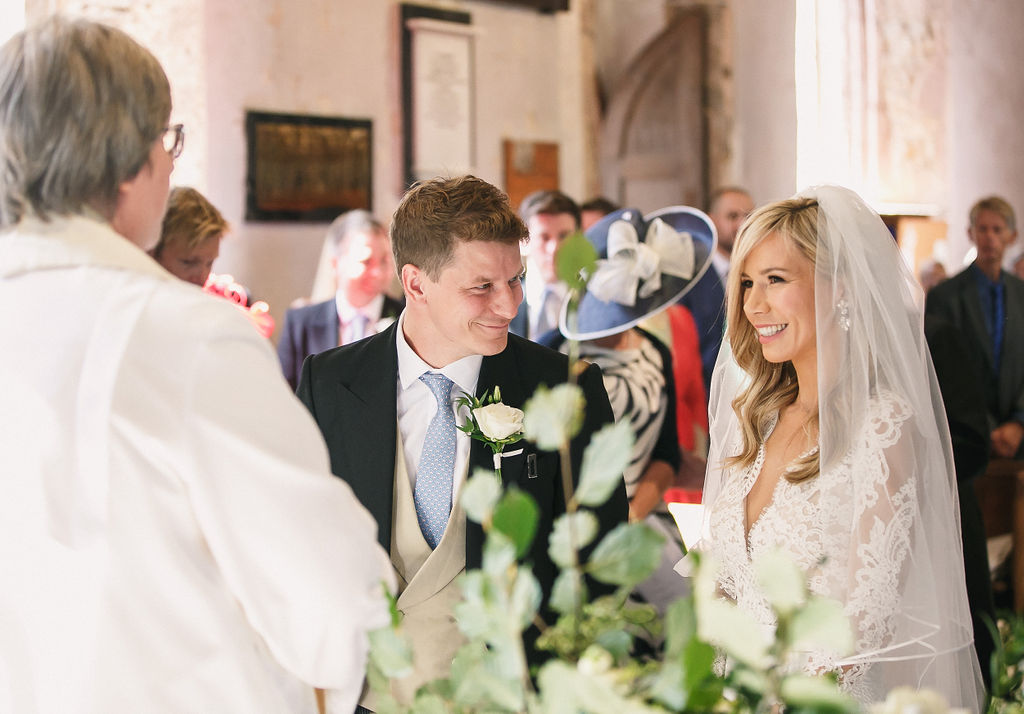
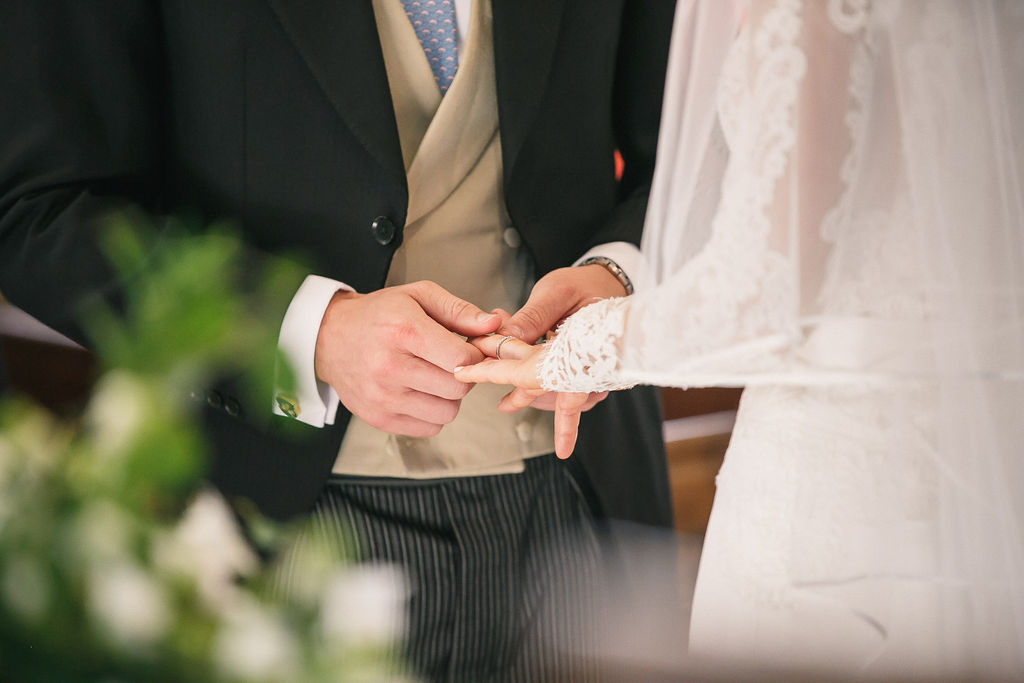
What actually are wedding vows and why do we say them? Marriage vows are declarations of lifelong commitment to each other, in the presence of loved ones. You must exchange vows for a marriage to be legal. Generally, you can either say the vows yourselves, repeat them after your registrar or clergy member, or say “I do” to them. You’ll normally exchange the rings straight after. Remember to run over the specifics with your clergy member or local registry office (for a civil ceremony.)
The religious vows we use today in the UK were first written in the Book of Common Prayer in 1549 but were around much earlier in the Sarum Rite in Medieval England. They remain largely unchanged; we’ve stopped using the word ‘obey’ for brides since 1928 though so you won’t see this anymore.
Just a heads up, a religious ceremony with traditional vows will need to be held at a registered religious building. At Pynes House we’re licenced to hold civil ceremonies or non-legal ceremonies after the marriage has been pronounced by a registrar. Read more about this further down.
Some Rules about Religious Wedding Vows
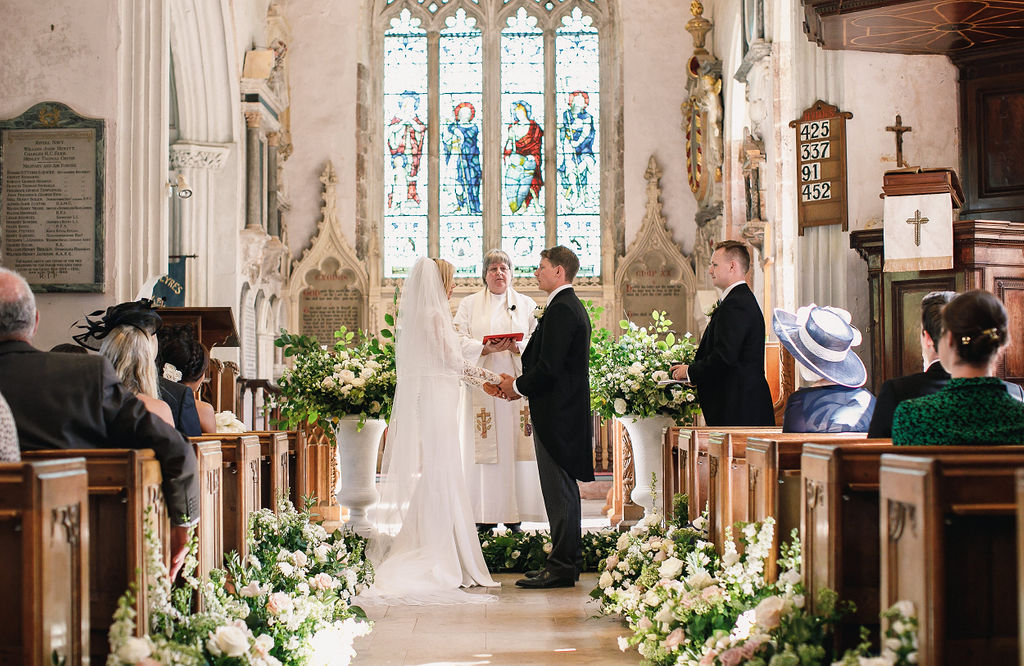
If you’re wanting to say religious vows, your ceremony will need to be in a registered religious building like a church. A civil ceremony offers greater venue choices but it must not have any religious references in words or music, so this is something to consider.
Some of our couples do choose to have a small, intimate civil ceremony at Pynes House or the registrar’s office before the wedding begins. This means they can check off the legal aspects of the marriage. They can then use a celebrant to structure their wedding ceremony to be exactly how they would like, with religious references if desired. To find out more about this, check out this article or get in touch.

Some Examples of Traditional Religious Wedding Vows
Here’s an overview of the main vows used in the UK. They’ve stood the test of time for a reason and they can be an eloquent way to describe your commitment to one another. The vows are additionally a great way to honour family tradition and to speak the same words as those who came before you.
Head over to this blog post for a rundown of traditional wedding vows for Jewish, Hindu, Muslim weddings and more:
Church of England Ceremony:
I [Name] take you [Name] to be my wife/husband, to have and to hold from this day forward, for better, for worse, for richer, for poorer, in sickness and in health, to love and to cherish, till death us do part, according to God’s holy law. In the presence of God I make this vow.
Catholic Ceremony:
I [Name] take you [Name] to be my wife/husband. I promise to be true to you in good times and in bad, in sickness and in health. I will love you and honour you all the days of my life.
I [Name] take you [Name] for my lawful wife/husband, to have and to hold from this day forward, for better, for worse, for richer, for poorer, in sickness and in health, until death do us part.
What Traditional Vows Really Mean
“To have and to hold from this day forward”
This key part of the vows come early on, it’s the crux of your promise and signifies a new beginning. According to vow coach Tanya Pushkine, “to have” is a promise that you intimately and exclusively belong to each other. “It’s for that person to know that having you means a full sense of pure, undiluted commitment in wedlock.”
“To hold” is the commitment to be there for each other in affection and tenderness. It’s the physical and mental support for one another.
“For better, for worse, for richer, for poorer, in sickness and in health”
As relevant today as it was over 500 years ago, this vow is a hugely important promise. It highlights that even though life may not always go as planned, you will rest united and continue to support one another.
“in the presence of God I make this vow”
Here’s where you commit to making the vow in the presence of the greater good. You vow a responsibility not only between the two of you but also to love, to life and to your community.

Are Traditional Religious Vows for You?
While many couples find sentiment in repeating the vows that their ancestors uttered on their big day, others can however prefer to opt for the freedom and personalisation of a civil ceremony, without religious references. Whatever you do, we recommend taking a few evenings to talk through your options and to make a meaningful decision.
At Pynes House, we’re happy to offer civil ceremonies in a number of our beautiful state rooms or even outside in our grounds. Wherever you choose to say your vows, Pynes House is the perfect Devon venue to celebrate your wedding, in the picturesque hills of Exeter.
SEE MORE: The Pynes House Gallery

FAQs
Can religious vows be altered?
Religious wedding vows should not be modified, however some couples may choose to add in religious readings, poetry or extracts. Biblical readings can be a great way to do this. Just make sure you discuss your plans with your clergy member because some are stricter than others.
What else needs to be said in the ceremony?
After exchanging vows, you’ll make ‘Declarations’ which reference God and your commitment to each other. For more information on these Declarations, head over to this website. For a timeline of a Church of England ceremony, click here.
Do you need a registrar in a religious ceremony?
Most religious venues will have an authorised person to pronounce the marriage legally. It’s important to check this beforehand because otherwise you’ll need to book a registrar. See this governmental page for more information.

If this talk of vows and your big day has got you thinking, why not check out our blog post on non-religious wedding readings or even take a look at our most recent real weddings series. If you’d like to know more about our wedding venue in Devon then why not get in touch, we’d love to meet you on a viewing.